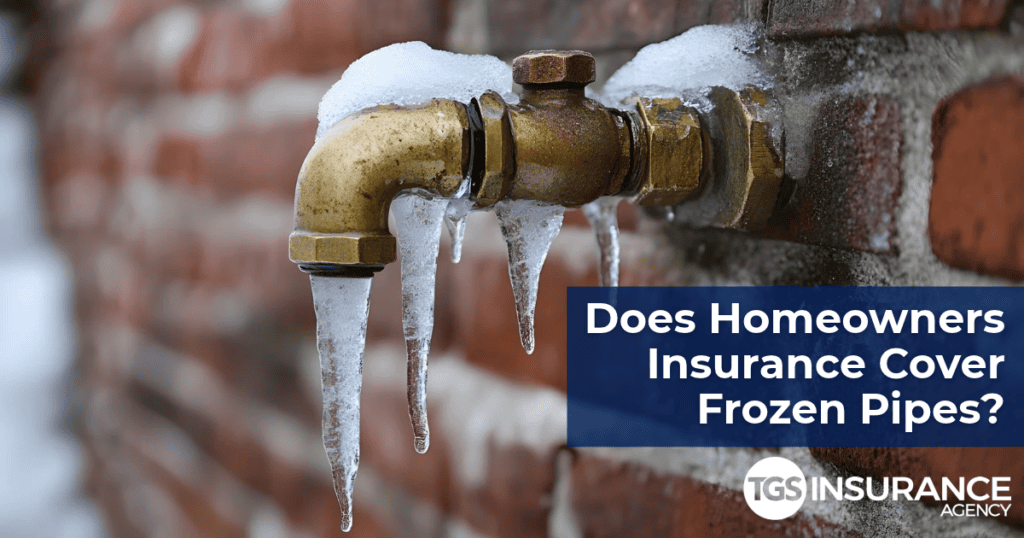
With the weather finally cooling down, it’s time to start preparing for another Texas winter. Colder temperatures bring the holiday season with them, but they can also bring worries for homeowners. You may be refueling your generators and stocking up on batteries to prep for the cold. But what about your home? Does your homeowners insurance cover frozen pipes?
Will My Home Insurance Cover Frozen Pipes?
There is no direct answer as to whether your home insurance will cover frozen pipes. If your policy is written to cover frozen pipes, then yes, it is covered. Your policy should outline coverage for “accidental and sudden” discharges of water from a plumbing source. Typically, damage from a frozen pipe qualifies as accidental and sudden. The big “if” here is whether or not you heated your home properly and used reasonable care during the cold temperatures. This can include taking preemptive measures to help prevent frozen pipes. Actions like turning your water off when you are away from home or ensuring a faucet stays dripping to keep the water active and harder to freeze can help prevent frozen pipes.
What Does Insurance Cover for Frozen Pipes?
When a pipe freezes, not only can the repairs be covered, but so can the costs of accessing the pipes. These costs can include tearing out walls and repairing them once the damage is fixed. You may be able to make a claim for any items within your home that get damaged from the burst pipe under your personal property coverage. Additionally, your loss of use coverage can be useful if you need to relocate from your home due to sudden and accidental damages. All of this is, of course, dependent on your policy. Be sure to review your policy and coverage limits before colder weather arrives.
It’s also best to understand your insurance policy in regards to pools. Many homeowners policies provide minimal coverage for swimming pools, according to the Texas Department of Insurance. So, your policy may or may not cover damage caused by frozen pipes around your pool. It’s important to review your policy before colder weather puts your pool at risk.
Related Reading: Are Swimming Pools Covered By Homeowners Insurance?
What Should I Do if My Pipes Freeze?
The first thing you should do when your pipe freezes is open the faucet it runs to, if you haven’t already. This helps relieve any built-up pressure that may have accrued and allows the water to flow. Begin thawing the pipe using a heat gun or hair dryer. If you can’t access the frozen portion of the pipe easily, it’s best to call a plumber for help.
TGSI Tip: Start at the portion of the pipe closest to the faucet, then work your way down! And NEVER thaw a pipe with an open flame!
How to Prevent Frozen Pipes
Preemptively protecting your pipes before a freeze can save you hundreds, if not thousands, of dollars in repairs. Preventing is much easier – and cheaper – than fixing, so take these preventative measures to best protect your pipes:
- Insulate Your Pipes: Insulating areas of your home that are a higher risk of freezing, such as crawlspaces, attics, and exterior walls, can significantly reduce any chance of them freezing over. Using foam or UL-approved heat tape are great ways to insulate them. UL means that it meets safety standards and is found to be free of foreseeable risk of fire, electrical shock, and other related hazards. Always be sure to follow your pipes’ manufacturer’s instructions.
- Leave Water Running: Because stagnant water freezes easier than running water, leaving faucets around the exterior of your house running can easily prevent freezing. Ensure you turn on both hot and cold faucets, but remember you only need a small trickle of water to keep it safe.
- Crank Up the Heat: Keeping your house warm can eliminate some of the risks of freezing pipes. Once warm air moves through your house, open cabinet doors in your bathroom and kitchen to keep the warm air circulating.
What Should I Do if A Frozen Pipe Bursts?
If a frozen pipe does burst despite your best efforts, turn off your water supply immediately. This could prevent any additional damage. The next step is to call a water restoration company; professionals have the ability to remove the water from your home with the least amount of damage possible.
Prepare For The Cold with TGS Insurance
The uncertainty that can come with colder weather can cause a headache that grows beyond the cold. Not knowing whether you’ll lose power or if a pipe will burst and flood your home can be worrying. But knowing and understanding your homeowners policy before the winter can help ease that stress. Our trained agents at TGS Insurance are here to help you understand your homeowners policy before the cold hits – and save you thousands in damages should your pipes freeze! Give us a call today to learn about how your homeowners insurance can covers frozen pipes.